


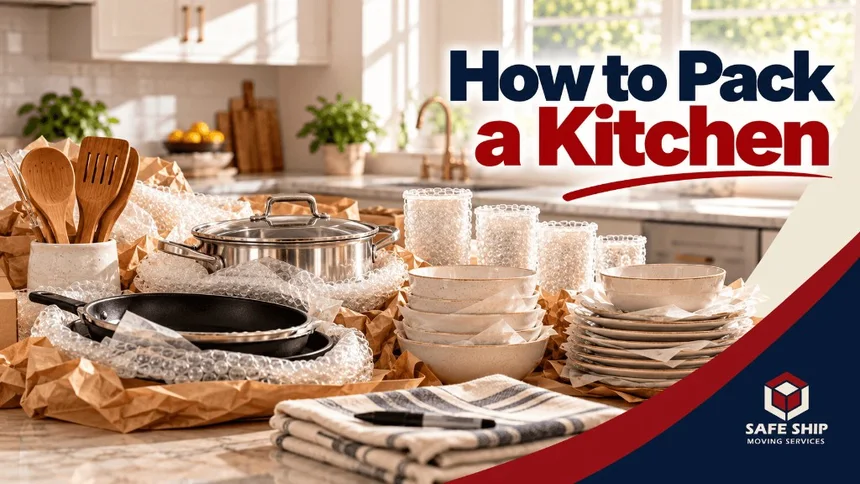
The kitchen is usually the last room you can give up and the first one that breaks. Dishes, glasses, and a full pantry take more time than the bedrooms. This guide shows how to pack a kitchen for moving without turning load day into a pile of shards. Safe Ship Moving Services is a licensed interstate broker (USDOT 3475743 / MC 1139083). If you want packing help for a long-distance move, we can coordinate that labor through a licensed carrier. We do not pack the truck ourselves.
Key Takeaways
- Pack the kitchen last: Start with unused serving pieces and extras. Keep everyday dishes, a pot, and the coffee maker out until the final days.
- Stand plates on edge: Vertical packing spreads the weight. A flat stack cracks the plate on the bottom.
- Leave food that can spoil or leak: Open liquids, leftovers, and frozen food do not belong on an interstate truck.
- Use dish packs, not grocery boxes: Double-walled cartons and packing paper beat a flimsy carton from the store.
- Hand off the hard room if the clock is short: Dense china, glassware, or a tight closing date is when partial packing is worth pricing.
What Do You Need to Pack a Kitchen?
Buy moving-grade supplies before you empty a cabinet. Mid-job substitutions are how plates end up in a produce box. For a fuller list of cartons and tape, see our guide to the best moving supplies.
- Dish-pack cartons: Extra-thick boxes built for plates and glasses.
- Medium boxes: Pantry goods, utensils, and small appliances. Keep them light enough to lift.
- Packing paper: Clean newsprint-style paper. Skip newspaper ink on dishes you still eat from.
- Bubble wrap and foam sleeves: Stemware, platters, and anything with a thin rim.
- Packing tape and a marker: Seal every seam. Label the room and the contents on two sides.
- Cell kits or dividers: Optional, but they keep glasses from knocking together.
How many boxes does a kitchen take? It depends on what you own, not the floor plan. A small apartment kitchen may finish in a few dish packs plus a couple of medium boxes. A house with two sets of dishes and a loaded pantry can fill a much larger stack. Count dish packs first. Then add boxes for cookware and food. If you are guessing, buy extra dish packs. Running out mid-room is what produces overloaded grocery boxes.
How Do You Pack Dishes and Glasses?
This is the job that decides whether the kitchen arrives intact. If you want a wider wrap method for art and electronics too, use our steps for how to pack fragile items. For plates and glasses, the kitchen-specific rule is simple: stand them up and pad the gaps.
Plates and bowls
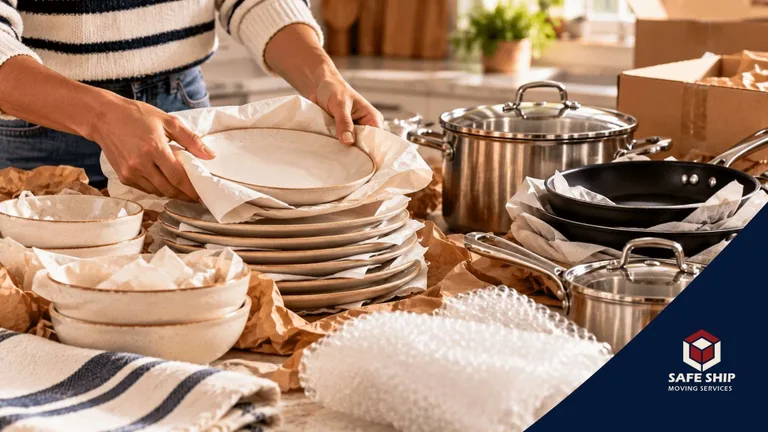
- Cushion the bottom of a dish pack with crumpled paper.
- Wrap each plate. Stack two or three wrapped plates, then wrap the bundle once more.
- Stand the bundles on edge, like files in a drawer. Do not lay a tall stack flat.
- Fill every gap so the plates cannot flop over when the box is tilted.
- Pad the top, close the carton, and mark it FRAGILE and KITCHEN - DISHES.
Should you pack dishes vertically or horizontally? Vertically. A horizontal stack puts the whole load on the bottom plate. That is the one that arrives in pieces.
Glasses and stemware
Stuff a sheet of paper inside each glass. Wrap the outside. Stand glasses upright. Do not nest unprotected glass. Use a cell kit if you have one. Wine glasses need extra wrap on the stem. Keep the carton under a weight you can carry without setting it on a corner.
What Kitchen Food Can You Pack?
Most of the pantry should be eaten, donated, or tossed before you buy boxes. You are not paying to haul half-used sauce across the country. For the items carriers refuse, read what not to pack when moving before you tape a food box.
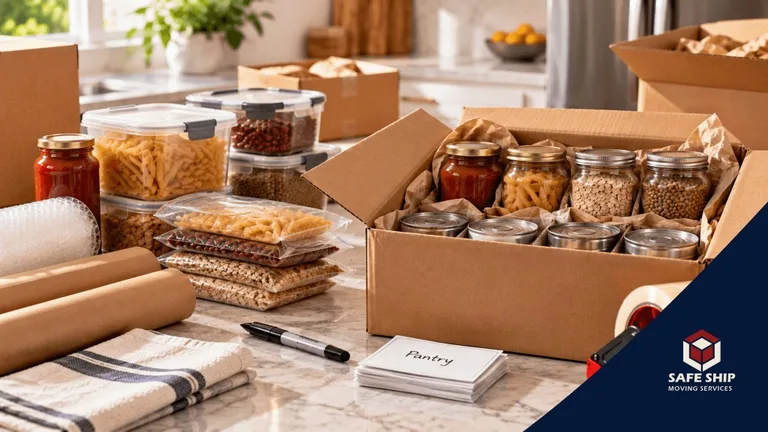
- Usually fine if sealed: Unopened dry goods, unopened canned food, and spices in tight containers, as long as heat on a long haul will not ruin them.
- Leave out: Perishables, frozen food, opened liquids, leftovers, and anything that can leak into the truck.
- Often refused: Cleaning chemicals, aerosols, and other hazardous kitchen products. Ask the carrier if you are unsure.
Pack pantry goods in small or medium boxes. Cans are dense. A large carton of jars is how a box blows out at the bottom. Group like with like, keep jars upright, and label the box so it does not get stacked under the grill.
How Do You Pack Pots, Pans, and Small Appliances?
Nest pots with a sheet of paper or a towel between each one. Bundle lids separately and stand them on edge in the same carton if they fit. Cast iron is heavy. Give it its own small box and do not mix it with glass.
For small appliances, use the original box when you still have it. If you do not, wrap the unit, bag the cord, and tape the bag to the appliance so it does not vanish in a utensils box. Empty crumb trays and water reservoirs. Do not pack leftover food in the toaster or coffee maker. Knives go in a rigid container or a knife block wrapped as one unit, never loose in a box of towels.
Keep one cook set out until pickup: a pot, a skillet, a baking sheet, a cutting board, and enough plates and utensils for a night or two. That kit rides in the car, not on the truck.
When Should You Pack the Kitchen?
Do not start with the drawers you use every morning. The kitchen stays open longer than any other room. A house packing timeline is usually four to six weeks. The kitchen sits at the end of that calendar. For the full-home clock, see how long it takes to pack a house.
| When | What to pack |
|---|---|
| 2-3 weeks before | Extra serving pieces, seasonal bakeware, specialty appliances, and pantry items you will not miss. |
| Final week | Everyday dishes, remaining cookware, and sealed food you still want to keep. Eat down the fridge. |
| Load day | The first-week kit stays with you. Empty the dishwasher and wipe shelves after the last box is taped. |
A small kitchen can take a focused afternoon. A house kitchen with dishes, pantry, and appliances often takes a full day if you wrap instead of dump. That is the room that blows a last-weekend plan.
When Is Kitchen Packing Help Worth It?
DIY works if you have dish packs, a free day, and a normal set of everyday dishes. Price packing labor when the cabinet count is high, the collection is china or crystal, or the close date leaves you one weekend. Partial packing is the usual middle path: you box pantry and pots, and the assigned crew wraps dishes and glass.
Ask for a written estimate that lists rooms, materials, and whether unpacking is included. Safe Ship can add that scope to long-distance moving services through a licensed carrier. We do not send a Safe Ship packing crew. Confirm what the carrier will not pack, including food and chemicals, before packing day starts.
Pack the Kitchen With a Plan, Not a Panic
How to pack a kitchen for moving comes down to order and materials. Unused items first. Dishes on edge. Food that can spoil or leak stays home. Everyday tools wait until the last days. If the room is bigger than your calendar, get a written packing estimate instead of wrapping china at midnight.
Need a carrier matched for the haul, with packing labor on the kitchen only or the whole house? Get a free quote from Safe Ship Moving Services and lock the packing plan before the first dish pack is taped.
Interstate Moving Services
Safe Ship coordinates interstate household-goods transportation with licensed motor carriers and can include packing labor when a carrier offers it. Get a written estimate for your inventory and dates.
Get a Free Quote


